
 EndocrinologyGeneral Surgery
Thyroidectomy


Procedure preparations
- In thyroidectomy, the thyroid gland is removed partially or totally, depending on the case. The thyroid gland is located in the front of the neck, under the larynx, and it produces the thyroid hormones that are mainly responsible for the metabolism process (converting the food into energy) in the body, and it also has a role in controlling the body’s temperature and heart rate.
- Thyroidectomy is done mainly in thyroid gland cancer, in addition to other cases, such as suspicious thyroid nodules, an enlarged thyroid gland (goiter) that affects swallowing or breathing, and some hyperthyroidism conditions (such as Graves’ disease) that don’t respond to other treatments.
- Thyroidectomy can be done in three approaches: conventional surgery, which means making a surgical incision in the neck to reach the thyroid gland directly, transoral thyroidectomy, which means making an incision inside the mouth, or endoscopic surgery, in which several small incisions are made in the neck.
- Thyroidectomy is done under general anesthesia, and it might take about 4 hours, depending on the case. The patient can often return home on the same day.
Procedure preparations
- Examining the thyroid gland of the patient.
- The patient must stop taking blood thinners (anticoagulant medications), ibuprofen, and any other medications or herbs that the doctor mentions before the procedure.
- The patient must stop smoking before the procedure.
- The patient mustn’t have anything for 8-12 hours before the procedure.
Procedure complications
- Anesthesia complications.
- Bleeding that might block the airways.
- Infections.
- Damage in the laryngeal nerve or vocal cords, which might lead to temporary or permanent hoarseness.
- Damage in the parathyroid glands (they’re located behind the thyroid gland), which could lead to a decrease in their hormone, and that affects the calcium in the body.
Procedure instructions
- Some side effects might occur after the procedure for a few days, such as pain and hoarseness.
- Partial or total thyroidectomy leads to a partial or total decrease in the thyroid hormones; therefore, you must replace them for the rest of your life.
- You must stick to the medications prescribed by your doctor.
- You must contact your doctor immediately in case a weird problem or symptom emerges.
- You must avoid strenuous physical activity and heavy lifting for at least 10 days.
- You can return to your normal daily routine the next day after thyroidectomy.
- Full recovery usually takes 2-3 weeks.


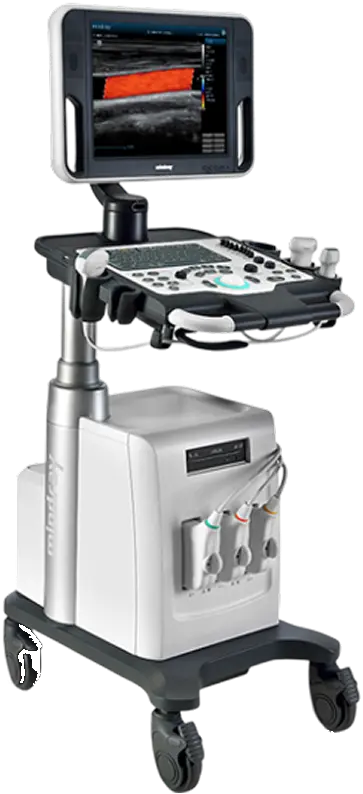
DC-30
Diagnostic Ultrasound system
 Syria _ Damascus _ Al-Rawda
Frequently asked questions about Thyroidectomy
What is Thyroidectomy?
Thyroidectomy in Syria: " In thyroidectomy, the thyroid gland is removed partially or totally, depending on the case. The thyroid gland is located in the front of the neck, under the larynx, and it produces the thyroid hormones that are mainly responsible for the metabolism process (converting the food into energy) in the body, and it also has a role in controlling the body’s temperature and heart rate. Thyroidectomy is done mainly in...
How do I prepare for Thyroidectomy?
" Examining the thyroid gland of the patient. The patient must stop taking blood thinners (anticoagulant medications), ibuprofen, and any other medications or herbs that the doctor mentions before the procedure. The patient must stop smoking before the procedure. The patient mustn’t have anything for 8-12 hours before the procedure. "
What are the aftercare instructions for Thyroidectomy?
" Some side effects might occur after the procedure for a few days, such as pain and hoarseness. Partial or total thyroidectomy leads to a partial or total decrease in the thyroid hormones; therefore, you must replace them for the rest of your life. You must stick to the medications prescribed by your doctor. You must contact your doctor immediately in case a weird problem or symptom emerges. You must avoid...
Which specialty is Thyroidectomy related to?
Thyroidectomy is related to: Endocrinology and General Surgery.
Where can I get Thyroidectomy in Syria?
You can get Thyroidectomy at clinics and hospitals in Syria. To find specialists in Endocrinology, see suggested doctors on this page or Click here
What are the possible complications of Thyroidectomy?
" Anesthesia complications. Bleeding that might block the airways. Infections. Damage in the laryngeal nerve or vocal cords, which might lead to temporary or permanent hoarseness. Damage in the parathyroid glands (they’re located behind the thyroid gland), which could lead to a decrease in their hormone, and that affects the calcium in the body. "


DC-30
Diagnostic Ultrasound system
Syria _ Damascus _ Al-Rawda