 Ophthalmology and Eye SurgeryOphthalmologyOphthalmic Plastic & Reconstructive Surgery
Vision Correction (Refractive Surgery)


Procedure preparations
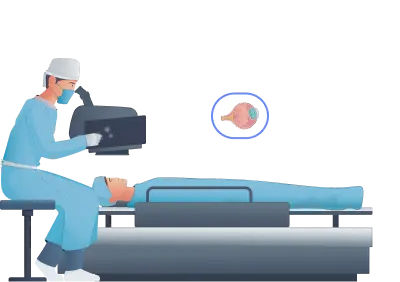
It’s an eye surgery that uses lasers to fix refractive eye problems such as nearsightedness (myopia), farsightedness (hyperopia), astigmatism, and sometimes presbyopia.
This procedure fixes the vision problems that result from the cornea (a tissue that covers the frontal part of the eye and protects the interior. It also has an important role in the vision) or lens.
There are several types of laser eye surgeries, and each type is chosen depending on the patient’s condition. They include:
- LASIK (Laser-Assisted In-Situ Keratomileusis): It’s the most used and common vision correction laser eye surgery, in which a problem in the cornea is corrected. It’s used to treat nearsightedness, farsightedness, and astigmatism.
- PRK (Photorefractive Keratectomy): It’s used in mild and moderate cases of nearsightedness, farsightedness, and astigmatism.
- LASEK (Laser Epithelial Keratomileusis): It’s used to fix a problem in the cornea in cases of nearsightedness, farsightedness, and astigmatism.
- RLE (Refractive Lens Exchange): Also called clear lens extraction, it’s used to replace the lens. It’s used to correct extreme nearsightedness and farsightedness.
- PRELEX (Presbyopic Lens Exchange).
- Intacs (Intracorneal rings): Also called intrastromal corneal rings, it's used to fix a problem in the cornea. Previously, it was used to fix nearsightedness, but nowadays, it’s mainly used to treat keratoconus and astigmatism.
- Phakic intraocular lens implants: It's used for extreme nearsightedness.
- SMILE (Small Incision Lenticule Extraction): It’s used to treat farsightedness and astigmatism.
- AK (Astigmatic Keratotomy): It’s not a laser surgery, yet it’s used to fix astigmatism surgically.
LASIK procedure
- In this procedure, only the eyes are numbed, and the patient stays awake. After anesthesia, the doctor cuts a tiny part of the cornea in order to direct the laser and fix the problem, and then this part is back in its place.
- Usually, LASIK procedures take about 30 minutes or less, and the patient can go home directly after the surgery.
Procedure preparations
- Not all people can undergo LASIK surgery. There are some conditions that make the person eligible, which are:
- The person must be older than 18 years old, and ideally older than 21 years old.
- The eye must be healthy.
- The cornea must have a suitable thickness for LASIK.
- The refractive problem mustn’t be unstable or very changing.
- The patient mustn’t have extreme dry eye.
- There were no problems with the cornea.
- There were no advanced cases of cataracts or glaucoma.
- No uncontrolled diabetes.
- The woman mustn’t be pregnant or breastfeeding.
- Before the procedure, the doctor makes a full eye exam to make sure that they’re healthy, in addition to choosing the suitable procedure type. Moreover, the patient mustn’t put any product on the face or eye the day before the surgery.
Procedure complications
- In the first week after the surgery, the patient might feel uncomfortable, have itchiness and pain in the eye, dry eyes, watery eyes, and swollen eyelids. Sometimes, these side effects could last longer.
- Some patients might suffer from dangerous complications, such as eye infections, blurred vision, poor night vision, haloes around the lights, light sensitivity, and cornea problems. In some cases, if the infections aren’t treated, they could lead to vision loss.
Procedure instructions
- After the procedure, a protective shield is placed for several days and even during sleep to protect the eye from any external impact.
- You mustn’t touch, press, or rub the eyes.
- You must stick to the prescribed eye drops and medications.
- In most cases, the patient feels that their vision has improved directly after the procedure.


DC-30
Diagnostic Ultrasound system
 Syria _ Damascus _ Al-Rawda
Frequently asked questions about Vision Correction (Refractive Surgery)
What is Vision Correction (Refractive Surgery)?
Vision Correction (Refractive Surgery) in Syria: " It’s an eye surgery that uses lasers to fix refractive eye problems such as nearsightedness (myopia), farsightedness (hyperopia), astigmatism, and sometimes presbyopia. This procedure fixes the vision problems that result from the cornea (a tissue that covers the frontal part of the eye and protects the interior. It also has an important role in the vision) or lens. There are several types of laser eye surgeries,...
How do I prepare for Vision Correction (Refractive Surgery)?
" Not all people can undergo LASIK surgery. There are some conditions that make the person eligible, which are: The person must be older than 18 years old, and ideally older than 21 years old. The eye must be healthy. The cornea must have a suitable thickness for LASIK. The refractive problem mustn’t be unstable or very changing. The patient mustn’t have extreme dry eye . There were no problems with the cornea....
What are the aftercare instructions for Vision Correction (Refractive Surgery)?
" After the procedure, a protective shield is placed for several days and even during sleep to protect the eye from any external impact. You mustn’t touch, press, or rub the eyes. You must stick to the prescribed eye drops and medications. In most cases, the patient feels that their vision has improved directly after the procedure. "
Which specialty is Vision Correction (Refractive Surgery) related to?
Vision Correction (Refractive Surgery) is related to: Ophthalmology and Eye Surgery, Ophthalmology and Ophthalmic Plastic & Reconstructive Surgery.
Where can I get Vision Correction (Refractive Surgery) in Syria?
You can get Vision Correction (Refractive Surgery) at clinics and hospitals in Syria. To find specialists in Ophthalmology and Eye Surgery, see suggested doctors on this page or Click here
What are the possible complications of Vision Correction (Refractive Surgery)?
" In the first week after the surgery, the patient might feel uncomfortable, have itchiness and pain in the eye, dry eyes , watery eyes, and swollen eyelids. Sometimes, these side effects could last longer. Some patients might suffer from dangerous complications, such as eye infections, blurred vision, poor night vision, haloes around the lights, light sensitivity, and cornea problems. In some cases, if the...


DC-30
Diagnostic Ultrasound system
Syria _ Damascus _ Al-Rawda